Shisha Charcoal Types Compared: Pistachio, Coconut, and Wood
A factual comparison of the three most common shisha charcoal types, pistachio shell, coconut shell, and wood-based, covering burn performance, ash output, and sourcing.
- charcoal comparison
- pistachio charcoal
- coconut charcoal
- wood charcoal
- shisha
- hookah

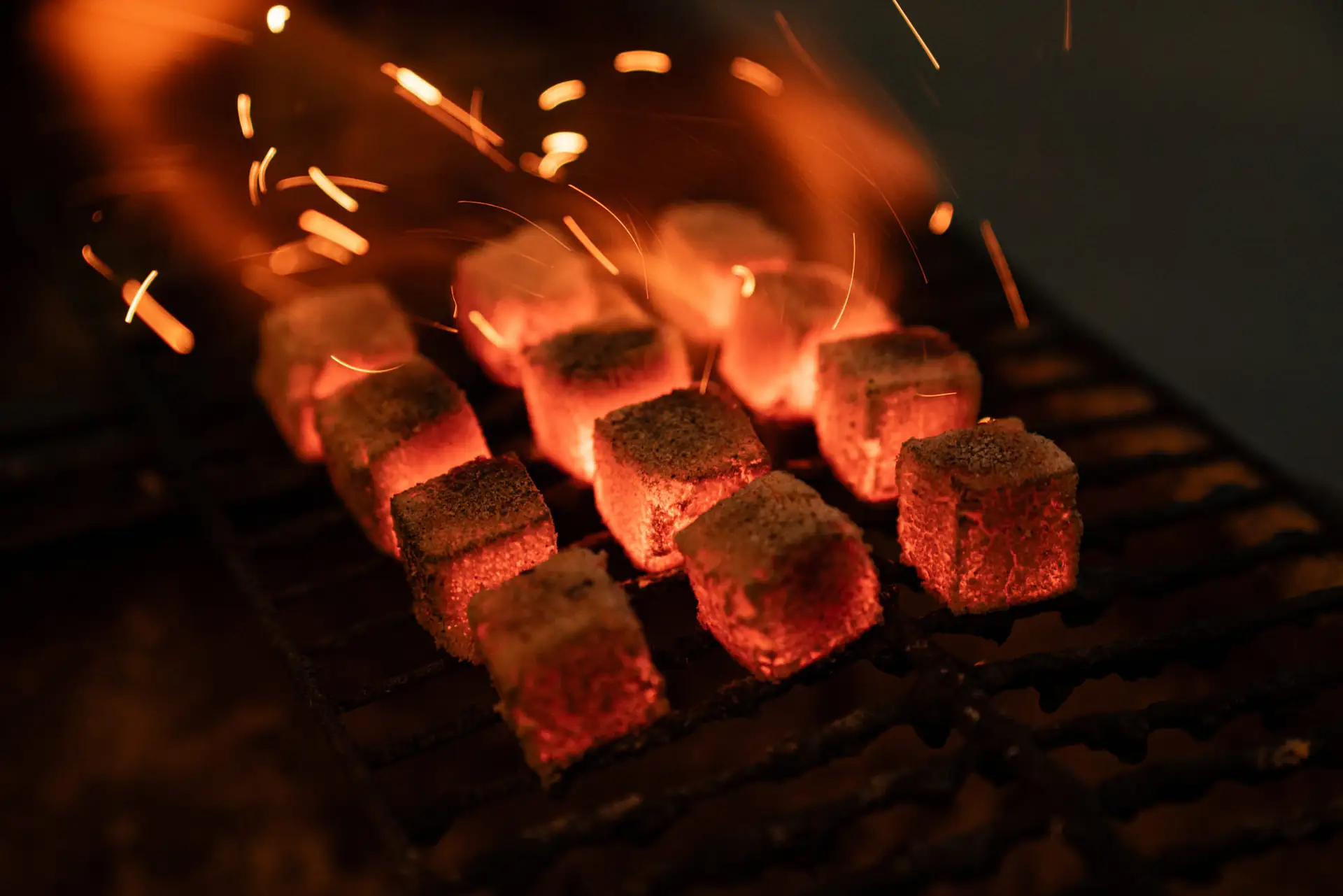
The raw material behind a shisha charcoal cube determines everything from burn duration and heat stability to ash residue and flavor interference, yet most buyers never see a side-by-side breakdown of how the three dominant charcoal types actually perform.
Charcoal sourcing decisions in the hookah industry tend to be driven by price and availability rather than performance data. That is understandable when margins are tight, but it leaves value on the table for distributors, lounge operators, and private-label brands serving quality-conscious markets. The three most widely traded charcoal types in the global shisha supply chain are pistachio shell, coconut shell, and wood-based (including sawdust briquettes). Each carries a distinct performance envelope shaped by the physical and chemical properties of its raw material.
Pistachio shell charcoal
Pistachio shells possess a naturally high fixed carbon content paired with low inherent moisture, two properties that translate directly into superior combustion characteristics. When carbonized and compressed into cubes, pistachio shell powder produces a briquette that burns at a steady, predictable temperature with minimal fluctuation after the initial ignition phase. Ash output typically falls between 5 and 6 percent, placing it among the best of all natural charcoal types. Burn duration ranges from 100 to 180 minutes per cube depending on size and airflow, and the charcoal introduces virtually no detectable odor or off-flavor to the tobacco.
This combination of low ash, stable heat, and flavor neutrality has driven rapid adoption across the Middle East, Turkey, and the Mediterranean, particularly in markets where consumers and lounge operators prioritize session quality over unit cost.
Coconut shell charcoal
Coconut shell charcoal is the most widely available type in global trade, anchored by massive production volumes in Southeast Asia. The hard inner shell of the coconut is carbonized and pressed into cubes or flat briquettes, producing a product that delivers strong initial heat output.
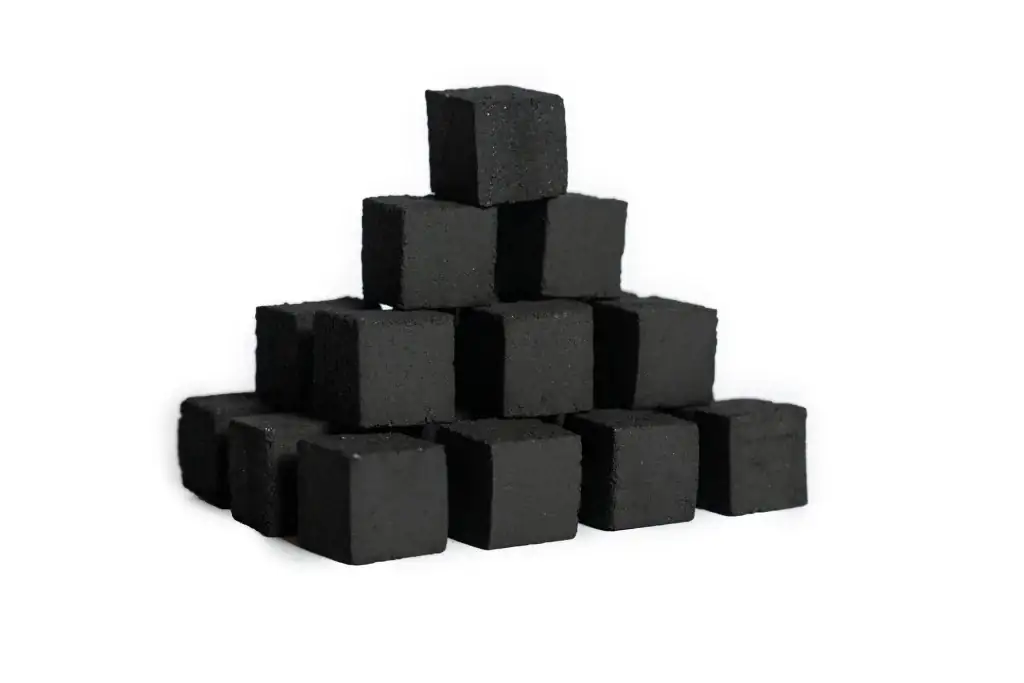
The trade-off is consistency. Coconut charcoal tends to spike in temperature shortly after ignition before settling into a more stable range, and ash content runs between 12 and 18 percent, noticeably higher than pistachio over a full session. Quality also varies significantly across producers; inconsistent shell sourcing and compression standards can lead to density variations within the same shipment, resulting in uneven heat distribution from one cube to the next. A mild coconut-like scent is sometimes perceptible during the lighting phase, though it generally fades and most users consider it neutral. The material's strength lies in its competitive pricing and broad availability, making it a reliable choice for price-sensitive distribution channels.
Wood and sawdust charcoal
Wood-based charcoal represents the oldest category in the market, encompassing everything from traditional hardwood lump charcoal to compressed sawdust briquettes. Performance here is the most variable because it depends heavily on the wood species, moisture content at carbonization, and the binding agents used in briquetting.
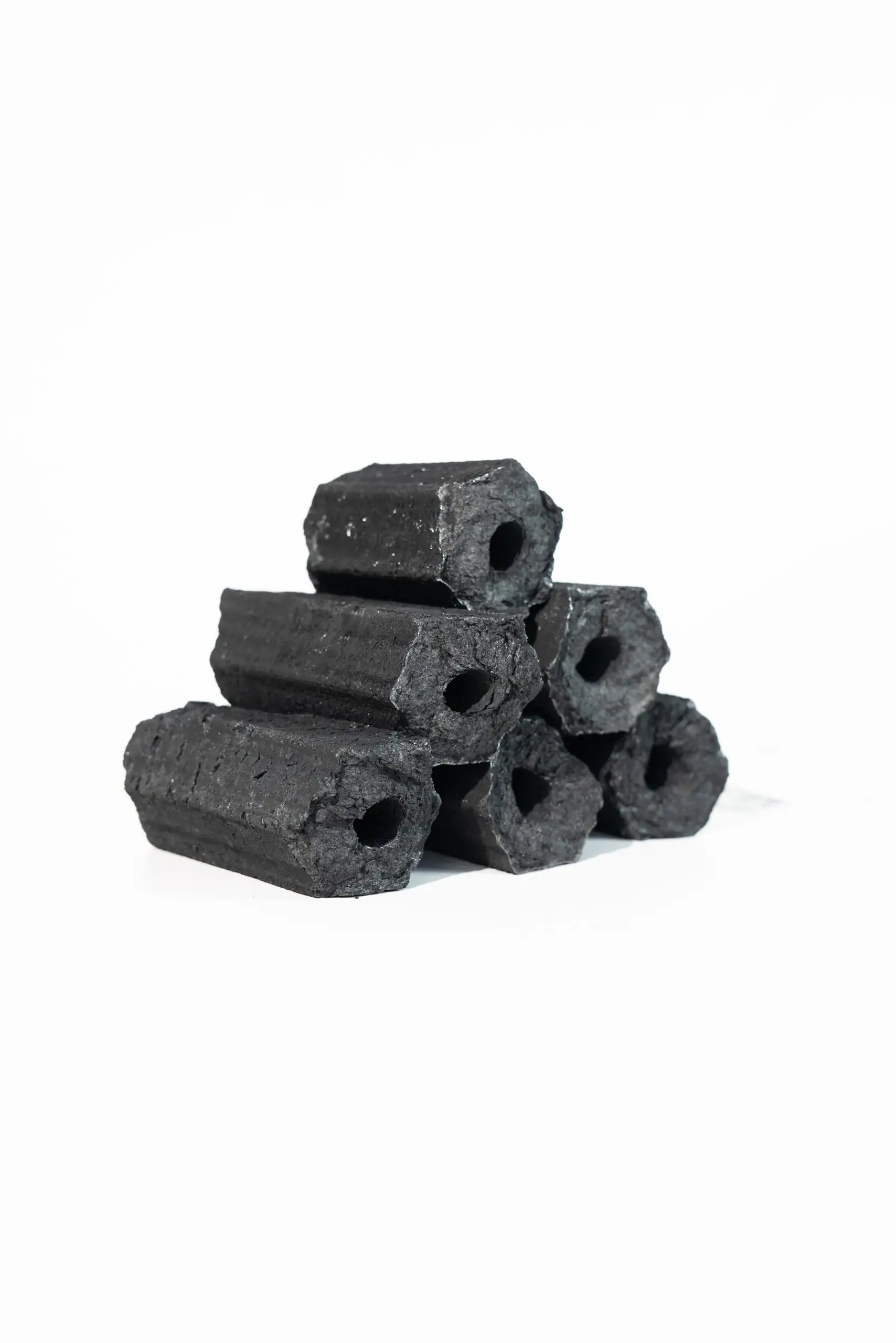
Ash content runs between 15 and 25 percent, the highest of the three types, and burn duration is generally shorter at 40 to 70 minutes. Heat output can be high but is prone to hot spots and uneven distribution, particularly in sawdust briquettes where compression quality varies. Odor is the most significant drawback: resinous wood species produce noticeable smoke that can interfere with tobacco flavor, a problem absent in pistachio and coconut charcoal. The sustainability picture is mixed as well, ranging from responsibly managed forestry operations to supply chains linked to deforestation.
Performance at a glance
| Property | Pistachio Shell | Coconut Shell | Wood / Sawdust |
|---|---|---|---|
| Ash content | 5-6% | 12-18% | 15-25% |
| Burn duration | 100-180 min | 60-80 min | 40-70 min |
| Heat stability | High | Moderate | Low to Moderate |
| Odor impact | Minimal | Low | Moderate to High |
| Raw material type | Agricultural byproduct | Agricultural byproduct | Primary or byproduct |
What the data means for sourcing decisions
For distributors and private-label clients targeting premium segments in the Gulf, Turkey, and Europe, the numbers tell a clear story. Markets that prioritize low ash, flavor neutrality, and session-long heat consistency are increasingly specifying pistachio shell charcoal as their preferred raw material. Coconut remains a strong option for volume-driven channels where price sensitivity outweighs performance differentiation, and wood-based products continue to serve traditional and barbecue-adjacent markets.
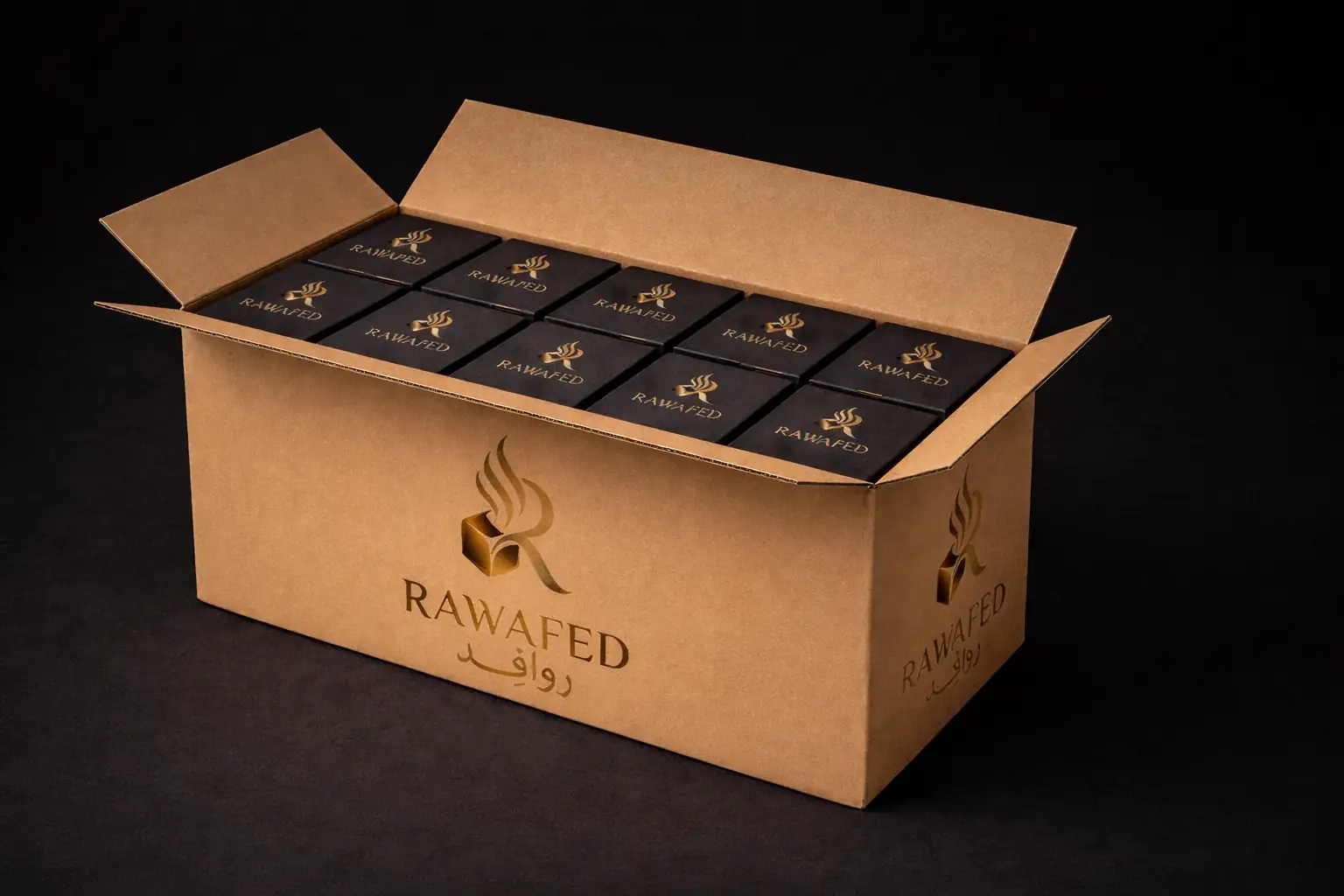
At Rawafed, we manufacture pistachio shell charcoal cubes in Muscat, Oman, with full OEM and private-label capabilities. Every batch is tested for ash content, burn duration, and structural integrity before it leaves our facility. When the sourcing decision comes down to measurable performance, the raw material makes the difference.